

Every fall, the Illinois State Fire Marshal puts out the same reminder: once the furnace turns on, carbon monoxide safety matters more. At Triple Service Inc, we’ve worked on furnaces, boilers, and water heaters around Mendota for over 70 years, and the two best protections we know of are working CO alarms and a yearly heating inspection.
What Is Carbon Monoxide?
Carbon monoxide (CO) is a gas produced when fuel doesn’t burn completely. Natural gas, propane, oil, wood, and gasoline can all produce it, and you can’t see or smell it.
Common Sources of Carbon Monoxide in Your Home
Trouble starts when a fuel-burning appliance cracks, clogs, or gets used the wrong way.
Heating and Hot Water Equipment
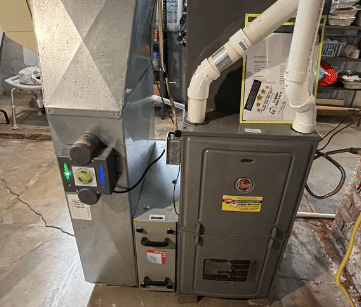
- Furnace: A cracked heat exchanger, blocked flue, or loose vent pipe can send exhaust into your ductwork. An annual heating maintenance visit checks all three.
- Boiler: Older LaSalle County boilers can develop corroded flue connections or poorly tuned burners. Regular boiler maintenance keeps both in check.
- Water heater: Gas units can backdraft, spilling exhaust at the vent hood. Soot or scorch marks near the top of the tank are a warning sign.
- Fireplace and chimney: A blocked chimney, or a damper closed while embers still smolder, pushes CO back into the room.
- Portable fuel-burning heaters: Kerosene and propane heaters burn fuel in your living space. Our Space Heater Safety 101 post covers safe use.
Elsewhere in the House
- Gas clothes dryer: A crushed or lint-clogged vent traps exhaust. Check that the outdoor flap opens.
- Gas range: Never use the oven or stovetop to heat the house, and run the hood fan while you cook.
- Attached garage: Exhaust from a car or snowblower can seep inside, even with the overhead door open.
- Generators and grills: Never run either indoors or in the garage. The CPSC recommends keeping portable generators at least 20 feet from the house, and a standby generator installed outdoors avoids the problem.
Warning Signs of Carbon Monoxide Exposure
CO exposure often looks like the flu.
Symptoms in People
- Headache: Usually the first sign, often dull and steady rather than sharp
- Dizziness or weakness: Feeling lightheaded or unusually worn out
- Nausea or vomiting: An upset stomach with no obvious cause, like something you ate
- Confusion: Trouble thinking clearly, or someone seeming drowsy or “off”
- Shortness of breath: Getting winded from light activity, like climbing the stairs
Suspect CO over a virus when several people (or pets) feel sick at once, symptoms ease after you leave the house, and nobody has a fever.
Signs at the Appliance
- A yellow or flickering flame instead of a steady blue one
- Soot or staining around vents
- A pilot light that keeps going out
- Heavy condensation on nearby windows
Any of these calls for a heating repair visit, even if your alarm hasn’t sounded.
What to Do If Your CO Alarm Goes Off
- Treat every alarm as real, even if no one feels sick.
- Get everyone outside, pets included.
- Call 911 once you’re out.
- Stay out until emergency responders say it’s safe.
- Have your fuel-burning appliances inspected before using them again.
A chirp usually means a low battery or an alarm at the end of its life. Patterns vary by model, so check the manual.
Where to Install Carbon Monoxide Alarms
Put a CO alarm on every level of your home, including the basement, and near every sleeping area.
Illinois’s Carbon Monoxide Alarm Detector Act requires at least one working CO alarm within 15 feet of every room used for sleeping. Homes are exempt only if they don’t burn fossil fuel for heat or hot water, have no attached garage, and sit away from any other CO source.
Skip spots where alarms misread or wear out early: kitchens, garages, furnace rooms, humid or dusty areas, and direct sunlight.
In multi-story homes, hardwired, interconnected alarms help, since a basement alarm wakes someone sleeping upstairs. Our electricians handle smoke and CO detector installation, including hardwired units.
How to Test and Maintain Your CO Alarms
Press the test button once a month, and replace batteries on a set schedule, like when the clocks change. Replace the whole unit by the end-of-life date printed on it, usually 5 to 10 years out depending on the model, even if it still passes the test.
How Heating Maintenance Helps Prevent CO Problems
A furnace or boiler tune-up before a North Central Illinois winter checks:
- The heat exchanger for cracks
- The flue and vent pipe for blockages and loose joints
- The burner, so fuel burns cleanly
- Safety controls that shut the system down if venting fails
For more, read our Furnace Safety Tips.
Carbon Monoxide FAQs
Does a carbon monoxide detector detect a natural gas leak?
No. CO alarms only sense carbon monoxide. If you smell rotten eggs, leave the house and call 911 or your gas utility from outside.
Do I need a CO alarm if my home is all-electric?
Yes, if you have an attached garage, a fireplace, or a generator you run during outages.
How long do carbon monoxide alarms last?
Check the end-of-life date printed on the unit. Many alarms also chirp when they reach it.
Can snow cause carbon monoxide problems?
Yes. High-efficiency furnaces and water heaters often vent through plastic pipes low on a side wall, and drifting snow can block them. Clear those pipes after every big storm.
Is a combination smoke and CO alarm good enough?
Yes. Illinois law allows combination units as long as the alarm clearly signals which hazard it’s sensing. Most use a distinct sound or voice warning for each.
Get Your Heating System Checked Before the Cold Sets In
Triple Service works with homeowners in Mendota, Ottawa, LaSalle, Peru, Princeton, Rochelle, Amboy, and Dixon, and if your alarms are past their date, we can replace those too. Contact us to book your heating inspection.
Need Help?
At Triple Service, we do the job right the first time, offering lasting Mendota HVAC, plumbing and electrical solutions for your home.
Book OnlineBook OnlineServing Families in the Greater Mendota Area
 All Service Areas