When the temperature climbs past 90 in Mendota, your phone probably starts buzzing with panicked texts from neighbors convinced their AC is broken. Here at Triple Service, we get those same calls every summer, and more often than not, the system is working exactly as it should. The real story during an Illinois heatwave is usually less about a failing air conditioner and more about how much strain the whole house — including its electrical system — is under.
The Number Everyone Forgets: 20 Degrees
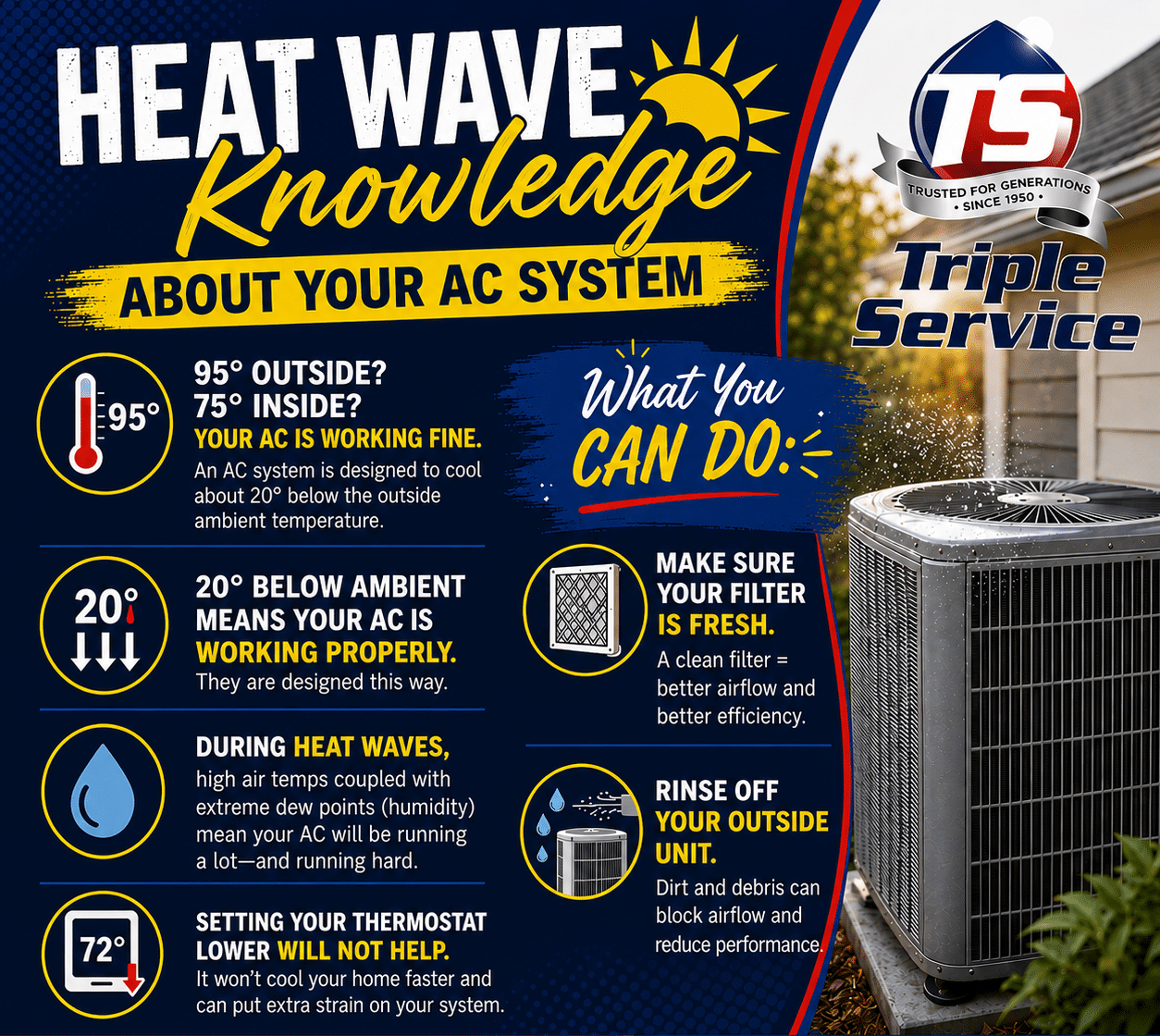
An air conditioner is designed to cool your home by about 20 degrees below the outside temperature, not to hit a specific number no matter what.
- 95° outside, 75° inside? Your AC is doing exactly what it’s built for.
- Cranking the thermostat to 68°? It won’t cool your house faster. It just makes your AC run longer and pull more power the whole time.
That last part matters more than most people realize.
Why Heatwaves Hit Your Electrical System, Not Just Your AC
During extreme heat, your air conditioner isn’t just running more often — it’s running under heavier load, thanks to high humidity and dew points stacking on top of the heat itself. That means your compressor, outdoor unit, and every wire and breaker feeding that system are working near capacity for hours at a stretch, sometimes for days in a row.
In a newer home, that’s usually fine. In an older Mendota home, it can expose problems that have been quietly waiting for years.
Warning signs your electrical system is struggling, not your AC:
- Breakers that trip repeatedly during peak heat
- Outlets that feel warm to the touch
- Lights that dim when the AC kicks on
- A persistent burning smell near the electrical panel
None of these are AC problems. They’re signs your home’s electrical system is out of step with current code, and the heat is exposing it.
Common Electrical Code Issues We Find in Older Mendota Homes
A lot of homeowners are surprised to learn their electrical setup doesn’t meet current standards — mostly because it worked fine for years without heavy AC use. The most common issues we run into on older homes in the area include:
- Undersized panels — built for far less amperage than today’s homes actually draw
- Missing or outdated breakers for high-draw equipment like AC condensers
- Aluminum wiring from the 60s and 70s that doesn’t play well with modern connections
- Ungrounded outlets in older additions or unfinished basements
- No surge protection at the panel, leaving expensive HVAC equipment exposed during summer storms
None of these mean your house is unsafe to live in day to day. But they do mean your system may not be ready for the sustained load a heatwave puts on it. If you’re noticing any of the warning signs above, it’s worth having a licensed electrician look at your electrical panel and wiring before the next stretch of 90-degree days — not after something fails.
What You Can Actually Control Right Now
The good news: most of what keeps your AC running efficiently during a heatwave is well within your control, and none of it requires touching a wire.
In order of what to check first:
- Your air filter. A dirty filter restricts airflow, forcing your system to work harder for the same result — and that extra strain travels straight back to your electrical panel. Check it monthly during peak summer and swap it when visibly dirty.
- Your outdoor condenser unit. Dirt, grass clippings, and debris build up on the coils and block airflow right when you need every bit of it. A gentle hose rinse (power off first) once a month keeps it breathing properly.
- Unusual behavior. If your system is still short-cycling, blowing warm air, or making strange noises despite a clean filter and clear coils, it’s time for an AC repair rather than a DIY fix.
And if you haven’t had a seasonal tune-up yet this year, routine maintenance before peak heat catches most small issues before they turn into no-cool emergencies.
When It’s Time to Upgrade, Not Just Repair
If your home is regularly tripping breakers during heavy AC use, or an electrician has flagged your panel as undersized, patch fixes only buy you time. At some point, the smarter move is:
- An electrical upgrade that brings your panel and wiring up to current code, sized correctly for the equipment you actually run today
- Paired with surge protection, especially in Illinois, where summer storms and heatwaves often show up back-to-back — putting both heat stress and electrical spikes on the same equipment in the same week
Two Systems, One Heatwave
Your AC running hard in 95° heat isn’t a malfunction — it’s the system doing exactly what it’s built for. But if your home’s electrical setup is decades behind the equipment it’s supporting, that strain shows up as tripped breakers and warm outlets long before your AC itself gives out.
- Keep your filter fresh
- Keep your outdoor unit clean
- Watch for electrical warning signs alongside AC struggles
In an older Mendota home, these two systems are more connected than most people realize.
If you’re dealing with tripping breakers, a struggling AC, or you just want peace of mind before the next heat spell hits, contact Triple Service and we’ll get a technician out to take a look.
Need Help?
At Triple Service, we do the job right the first time, offering lasting Mendota HVAC, plumbing and electrical solutions for your home.
Book OnlineBook OnlineServing Families in the Greater Mendota Area
 All Service Areas