

Expert Tips
Why Mendota Basements Flood and What a Sump Pump Can Do About It
Call Now (815) 539-3828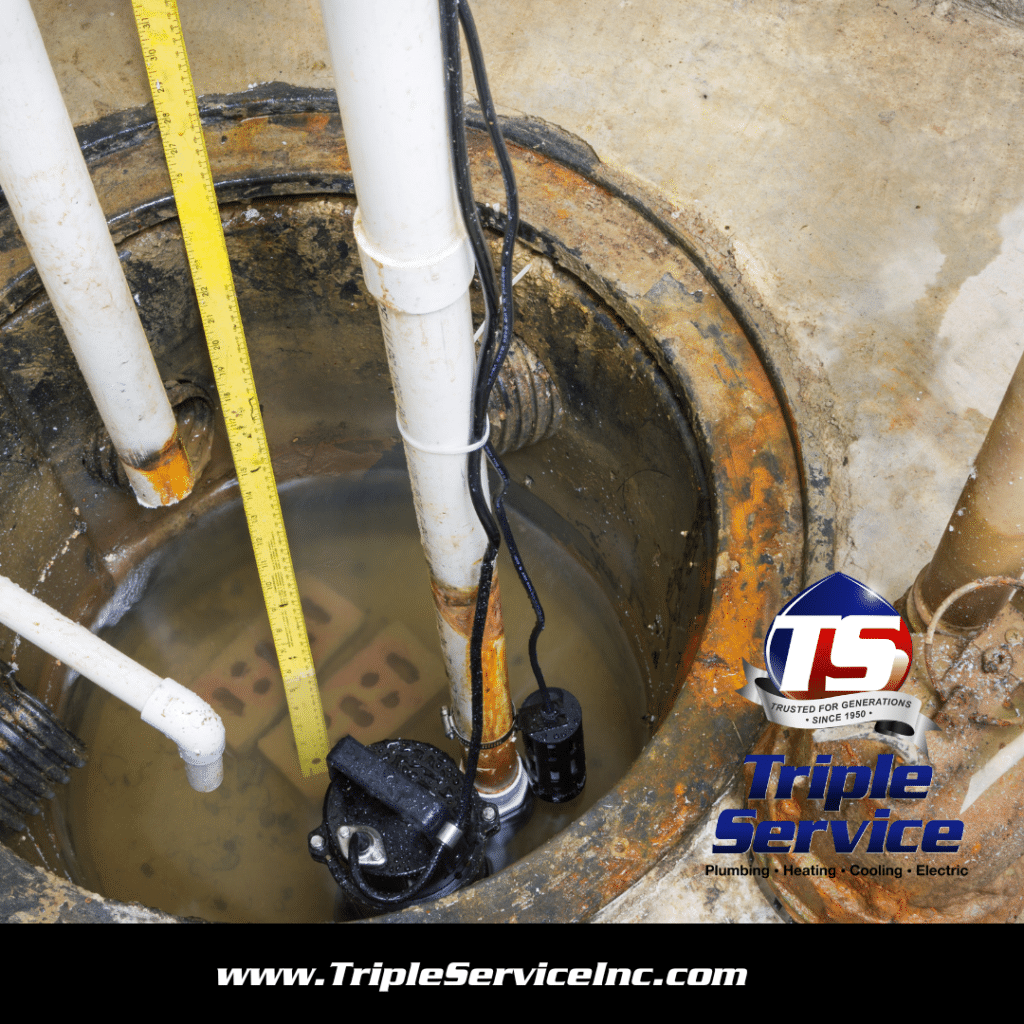
Basement flooding feels like a sudden disaster, but it’s rarely random. There are usually specific conditions at work: soil type, drainage patterns, foundation age, gutters, grading. Once you understand what’s actually causing the problem, it’s a lot easier to prevent it.
Triple Service Inc. has worked with homeowners across Mendota and the surrounding area for years, and the same causes tend to come up again and again. Here’s a breakdown of what’s behind most basement flooding situations, and where a sump pump fits into the solution.
Saturated Soil and Hydrostatic Pressure
This is the big one in this part of Illinois. Mendota sits on soil with a significant clay content, and clay is notoriously poor at draining quickly. When rainfall is heavy or prolonged, or when snowmelt adds to already-wet ground in early spring, the soil around your foundation can become fully saturated.
Once that happens, water has nowhere to go. It starts building pressure against your basement walls and floor. This is called hydrostatic pressure, and it’s powerful enough to push water through hairline cracks, concrete joints, and the floor-wall seam. You don’t need a major structural failure for water to get in: just enough sustained pressure and a small gap.
A sump pump addresses this by collecting groundwater as it accumulates and moving it away from the house before the pressure builds to the point of intrusion.
Improper Grading Around the Foundation
The ground around your home should slope away from the foundation, not toward it. When that grading is flat or pitched inward, which happens over time as soil settles, rainwater flows toward the house instead of away from it and pools against the foundation.
This is one of the more overlooked causes of chronic basement moisture. Homeowners will waterproof walls, install drain tile, and upgrade their sump pump, but if surface water is still funneling toward the foundation, the problem keeps coming back.
Regrading the soil around the perimeter is sometimes the fix. In other cases, improved drainage, including a properly installed sump system, compensates for what the grading can’t fully correct.
Gutters and Downspouts Doing the Wrong Thing
A standard roof sheds a surprising amount of water during a moderate rainstorm. If gutters are clogged or downspouts are discharging right next to the foundation, that water gets concentrated exactly where you don’t want it.
Downspout extensions that move water at least four to six feet away from the house make a meaningful difference. It’s one of the lowest-cost, highest-impact things a homeowner can do, and it reduces the load on the sump pump system at the same time.
Cracks in the Foundation or Block Walls
Older homes in Mendota often have poured concrete or block foundations that have developed cracks over decades of freeze-thaw cycling. Water finds those cracks. Even small ones that look cosmetic can let in moisture over time, and larger ones can allow active water intrusion during heavy rain.
Sealing cracks is part of the solution, but it’s not always sufficient on its own if the underlying pressure isn’t addressed. A Mendota plumbing repair assessment combined with a look at the drainage situation gives a clearer picture of what’s actually needed.
A Failed or Overwhelmed Sump Pump
Sometimes the drainage system is in place; it just isn’t working. A sump pump that hasn’t been tested or serviced in several years may run when it needs to, or it may not. Float switches stick. Motors burn out. Discharge lines freeze or get blocked.
During a major storm, an overwhelmed pump, one that’s undersized for the volume of water it’s dealing with, can run continuously until it overheats and fails. That’s often when a homeowner discovers there’s a problem: in the middle of the worst rain of the season.
If your existing sump pump in Mendota hasn’t been checked recently, spring is the right time to do it. And if you’re not sure what you have or how it’s performing, a Mendota plumbing inspection can give you a straight answer.
The Role of Electrical Reliability
A sump pump is only as reliable as the power keeping it running. During spring storms in northern Illinois, outages aren’t uncommon. If the power goes out and your pump has no battery backup, your basement is unprotected at exactly the wrong moment.
Proper electrical setup matters too: a dedicated circuit, appropriate grounding, and surge protection to guard against voltage spikes that can damage the pump motor. These aren’t extras; they’re part of a system that actually works when it needs to.
Putting It Together
Most basement flooding isn’t caused by one thing. It’s usually a combination of factors that compound during the worst conditions. Getting ahead of the problem means understanding your specific situation: what the drainage looks like around your foundation, the condition of your existing system, and whether your electrical setup supports reliable pump operation.
If you’re not sure where things stand, Triple Service Inc. is here to help you figure it out before spring gets serious. Reach out to schedule an appointment and we’ll take a look at what’s going on.
Need Help?
At Triple Service, we do the job right the first time, offering lasting Mendota HVAC, plumbing and electrical solutions for your home.
Book Online Book OnlineServing Families in the Greater Mendota Area
 All Service Areas